Tag: 75205

  • An Architectural Progression of Architecture Patrons – One Family’s Homes

    An Architectural Progression of Architecture Patrons – One Family’s Homes

    pic1and8.jpg

    I often see the same families purchase, renovate or build a succession of increasingly architecturally significant homes. While a person cannot collect homes in the same way that a collector can acquire paintings or sculpture, the instinct is the same. The curiosity, passion and desire to live in and around extraordinary beauty and profound design is the same whether for a collector of art or a patron of architecture. In future blog articles I will discuss some of the great family lineages of owners of significant architect designed homes, both modern and eclectic.

    International Style Home
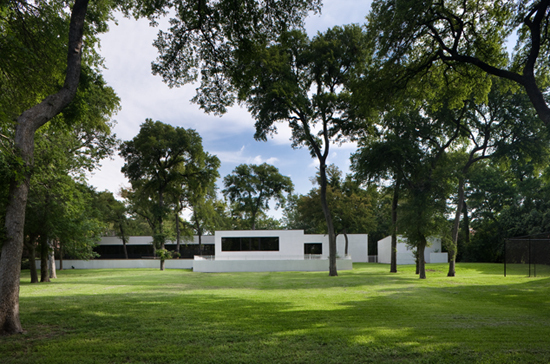
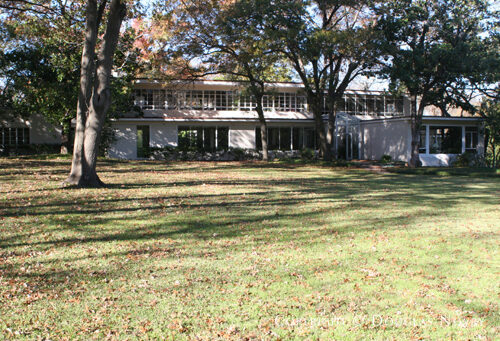
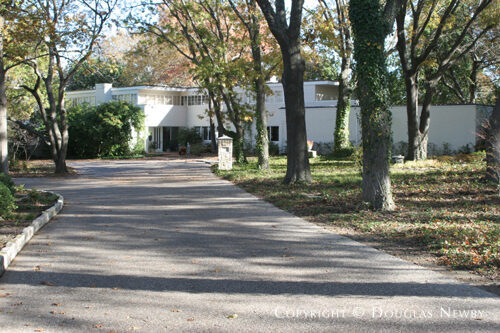
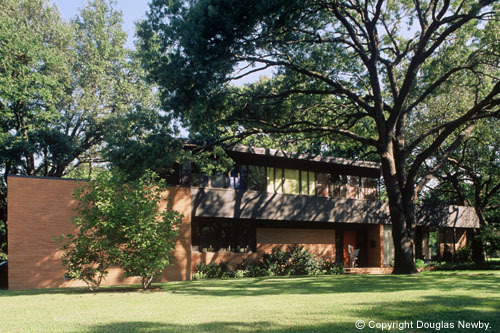
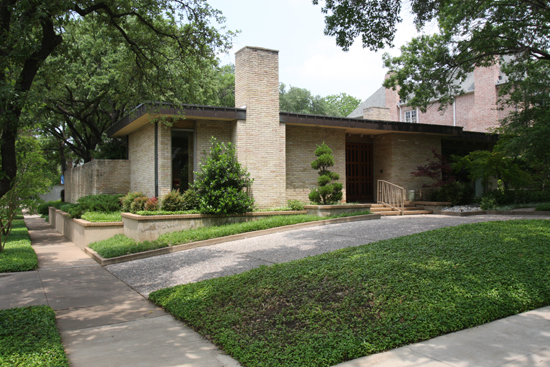
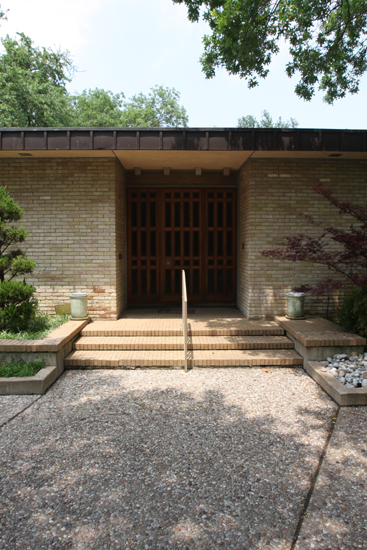
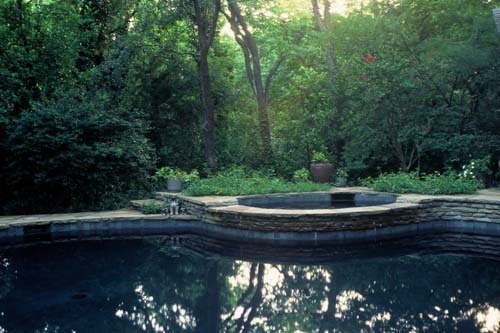
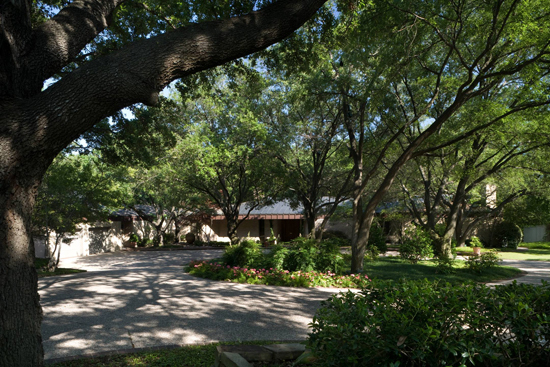
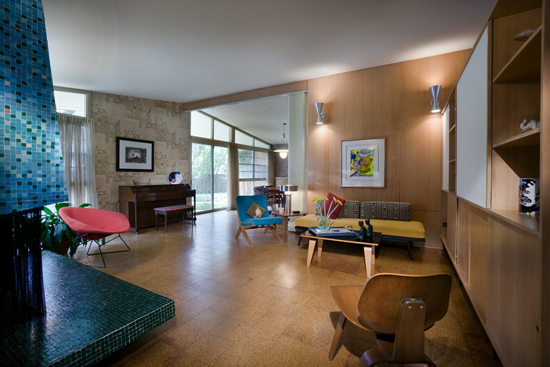
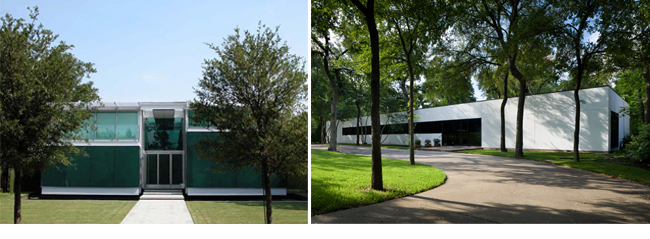
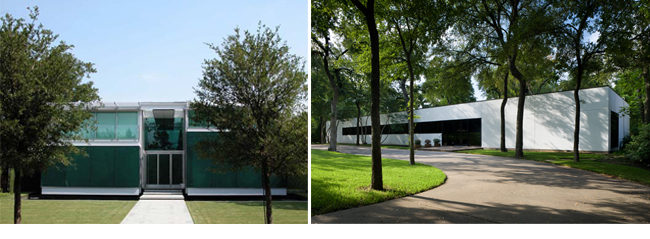
    Here we see an International Style home designed for a young couple with five children. The couple hired James Nagle, a graduate of Stanford with an architecture degree from MIT and a co-founder of the Chicago architecture firm Nagle Hartray. Built in 1976, this home in Bent Tree was the finest example of International Style architecture since Stanley Marcus had Roscoe Dewitt design his International Style home in 1937. Set on two acres along a greenbelt, this modern home is sleek, stark and yet comfortable for a family. Some think that clean-lined and hard-edged modern is only appropriate for highrises, urban couples or fastidious style makers. This modern home in Far North Dallas shows that a home can have a compelling design, a pastoral setting, bedrooms for multiple children, expansive yards, gardens, pools and courts to accommodate activities of families and friends. The result is a home dramatic for entertaining, utilitarian for a family and aesthetically attractive through the decades.

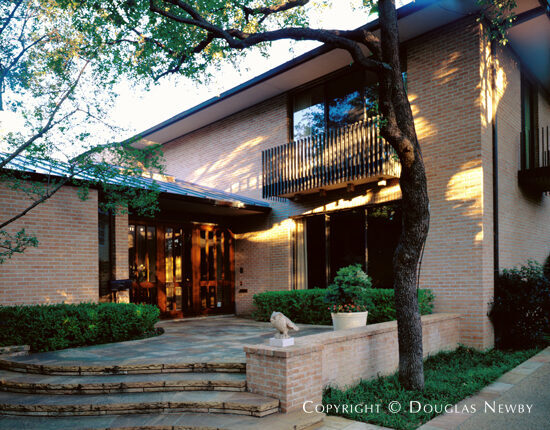
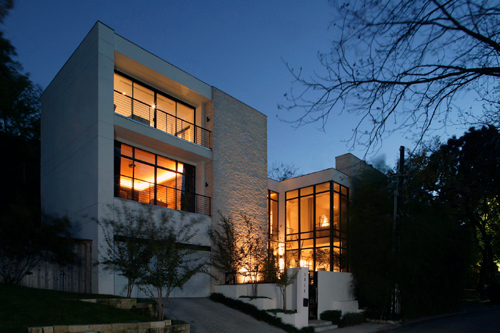
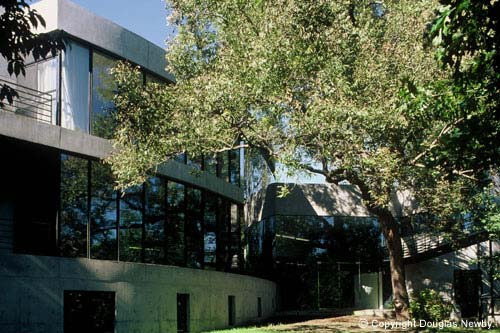
    The same couple, when the children were grown, again hired architect James Nagle in collaboration with Robert Neylan to design another modern home. This home combined the latest technology, building materials and construction techniques with timeless and more accessible materials and fixtures. Where modern houses are often associated with isolated locations, modern residential parks, or clusters in urban locations, this modern home is right at home in the leafy and traditional suburb of Highland Park.
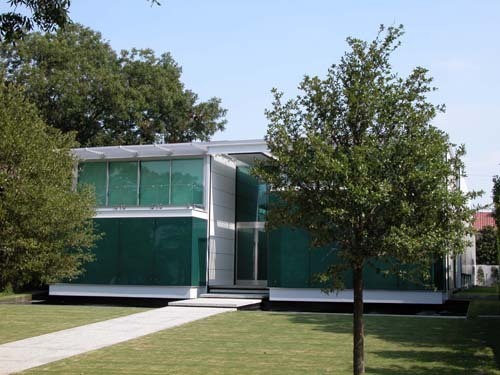
    While the architect was sensitive to the setbacks and scale of the homes designed in a European tradition around them, this home exudes modernity. As you approach the front door you begin to experience a subtle and sublime transformation, a different environment, one that is familiar, but expressed in such a new way. A compilation of stainless steel, teak and granite and Belgian glass continues that aura as you enter. A visitor in the home feels exhilaration and tranquility at the same time. At 10,000 square feet, the size of this Highland Park Translucens House is somewhat larger than the Bent Tree home, but occupies a much smaller parcel of land. As a result, the Highland Park house does not look outward in the same way that the Bent Tree house does, but looks inward into a courtyard. The view of the street is restrained by translucent glass that can be darkened for more privacy Extra bedrooms were eliminated, and additional space was allowed for returning family members in the form of vertically and horizontal open galleries, courtyards, and public spaces bridged by glass and connected by stairs.
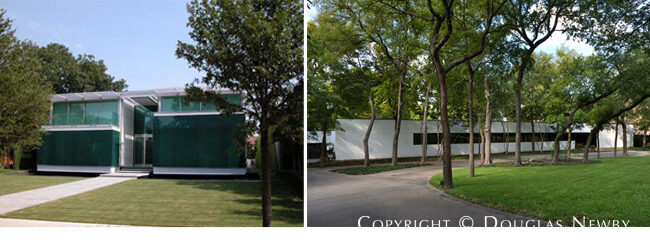
    Here is an example of two homes created for the same family: same architect, different needs and different settings, but both modern homes that continue to earn appreciation, credibility and applause.
    See Bent Tree modern home Future Offering

  • Private-Public Preservation Tools Coming to Dallas and Highland Park

    Private-Public Preservation Tools Coming to Dallas and Highland Park

    carrekeroverhill.jpg

    Highland Park and Dallas Preservation Plans

    I’m excited to report that residents of Dallas and Highland Park have two new avenues for historic preservation of their homes. One is a proposed new initiative in Highland Park that should be in place by early 2010; the other is an effort to expand the presence of an existing national program to the entire Dallas area. Together, these important preservation tools will give property owners additional protections for the exterior of their homes, in ways that protect their home into the future.

    Property Owners Have Sole Right to Add Preservation Protection

    With most preservation tools – such as local ordinances, preservation districts, etc. – restrictions or requirements are imposed on individual property owners by the neighborhood, community or government. However, the preservation tools coming to Dallas are different because homeowners can initiate restrictions on their own property.

    Park Cities Historic and Preservation Society, and Trust for Architectural Easements

    By coincidence, I had two appointments fall on the same Monday – breakfast with Dan Reardon of the Trust for Architectural Easements, who was in Dallas for a two-day exploratory visit, and lunch with Marian Ann Montgomery of the Park Cities Historic and Preservation Society to discuss preservation in the Park Cities.

    Park Cities Historic and Preservation Society

    Marian Ann Montgomery and the Park Cities Historic and Preservation Society are working with the town of Highland Park on a historic preservation ordinance that would allow individual homeowners to submit their property for designation as a protected structure. The town of Highland Park will participate by managing and enforcing the ordinance of the properties accepted for protected status.

    This approach is really quite brilliant because no districts or ordinances – historic, conservation or teardown – are crammed down the throats unwilling homeowners. This preservation ordinance will only apply to properties put into place at the request of the property owner. Architecturally significant Highland Park homes will be preserved, architectural prestige enhanced, and momentum generated for maintaining the architectural landscape of Highland Park. Highland Park township resources will be better employed on preserving significant structures rather than imposing unwanted restrictions on non-receptive property owners.

    Trust for Architectural Easements

    Don Reardon was in town as part of an exploratory visit for the Trust for Historical Easements, which is looking to make Dallas a major part of its efforts. This trust has been very successful this decade in receiving façade easements and protecting the future of these buildings, both residential and commercial. Here again, this preservation measure is deployed by the property owner, assisted by the Trust and acknowledged by the Department of the Interior, which grants a 3% – 17% tax deduction for the donated façade. Characteristically a property owner donates the façade easement to the Trust for Architectural Easements after the Trust helps the property owner place the property on the National Register of Historic Places. The Trust then owns and controls the façade and the property owner receives a tax deduction in the 3% – 17% of the building’s value, most often around 10% of the home’s value.

    Members of the Trust for Historical Easements have identified Dallas as an area with great houses and great architecture, with people interested in preserving it. I think that’s exciting.

    Architectural Patrons and Philanthropists

    These preservation incentives will resonate with architectural patrons, philanthropists and those people who love the aesthetic landscape of Highland Park and the Dallas area. Donating a façade easement to protect the architecture in perpetuity is much the same as donating a piece of art to a museum – except the donor doesn’t have to worry about the architecturally significant home being put in storage. Architecture is our public art. Often, more people will see the front of an architecturally significant house than will see a painting or sculpture in a museum. Dallas is a city of patrons and philanthropists that astound the rest of the world with their giving. These preservation tools provide yet another avenue to improve our community through giving.

    Owners Who Are Already Protecting and Preserving Their Homes

    We know that there is an audience for these types of voluntary preservation tools because we are already seeing great citizens protect their homes. Whether these homeowners elect to participate in one of these programs or elect to take a tax deduction is irrelevant because measures are already in place to preserve the architecture.

    Stanley Marcus Home

    Years ago, the Lovvorn family of Dallas initiated historic designation for their home, which was formerly owned by Stanley Marcus. They have accepted landmark status and are in the process of doing further renovation.

    Edward Durell Stone Designed Home

    Owners of one of the great American modern homes of the 20th century, Jennifer and John Eagle, retained architect Russell Buchanan for a masterful renovation of this Edward Durell Stone designed home. They are making plans to preserve the home for future generations.

    John Allen Boyle Designed Home on Overhill

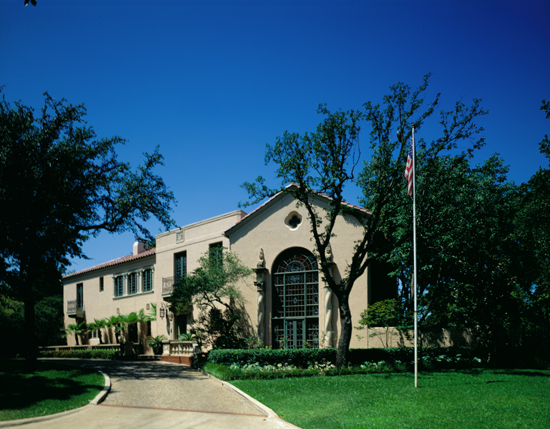
    Few eclectic homes have a façade as distinctive as this home designed by John Allen Boyle, who was also the architect for The Mansion on Turtle Creek. Denny and Connie Carreker have been relentless about renovating and protecting this home, including putting the original parcels of land back together.

    Scott Lyons Designed Home

    This Highland Park home, one of the most important homes designed by Scott Lyons (and one much loved by the community) will be given to an important foundation so that it may be preserved and used in much the same way it has been over the last 50 years.

    Fooshee and Cheek Designed Home

    Jack Knox has made one of the most dramatic revisions on a home on Armstrong Parkway people now love.

    Many Successful Preservation Efforts in Dallas

    There have been many successful preservation efforts in Dallas. The nation’s most successful neighborhood revitalization occurred in what are now Dallas’ historic districts. The city possesses an abundance of conservation districts. We’ve had mixed success with a teardown ordinance – that may have created more acrimony than value. But most importantly, I’m seeing increasing interest in architecture and preservation. And I’m heartened by these two new preservation tools, with their potential to further protect architecturally significant homes and to assist homeowners in preserving great properties into the future.

  • Architect designed home demonstrates link — Mediterranean and Modern

    Architect designed home demonstrates link — Mediterranean and Modern

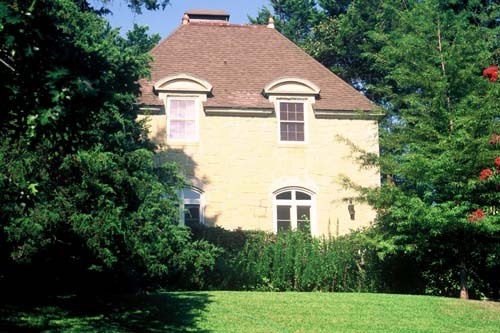
    Recently, I represented a very stylish and sophisticated young couple who desired a modern home. These buyers recognized the Robert Meckfessel design of this Mediterranean home in Greenway Parks is a link to classic Mediterranean and Texas Modern styles. They knew the influence of Spanish Colonial homes on David Williams who created the Texas Modern style of architecture. They immediately responded to the modernity of this Robert Meckfessel-designed home, which they quickly purchased.

    Modern home lovers also usually appreciate Mediterranean homes.

    I often find that clients and friends who really enjoy modern homes have a similar affinity to Mediterranean-style homes. The open floor plans, abundance of natural light, and lack of heavy ornamentation are the most apparent similarities. The more subtle similarities are rooted in the concept behind Mediterranean and Texas modern homes.

    Symmetrical structure and subordinate wing found in Mediterranean and David Williams Homes

    One can see the similarity of the classic Mediterranean homes in Europe, the Spanish Colonial homes in Mexico and the David Williams designed Texas Modern homes in Dallas. All these homes typically had a spare, symmetrical and formal structure with a subordinate wing that added later. Courtyards were often framed with these subordinate wings or low courtyard walls. Covered terraces provided shelter from the summer sun while allowing the low winter sun to infiltrate the home and provide and outdoor space that captured the summer breezes.

    You can see these same architectural components at the house designed by David Williams on McFarlin in University Park.

    The David Williams designed homes at both McFarlin and St. Johns reflect the formal structure, the more informal wings, continuous walls to outside rooms, and protected porches. These homes, like the early Mediterranean homes and the recent home by Robert Meckfessel share their architectural honesty, lack of excessive ornamentation and a crisp modernity softened by rolled corners on the plaster walls on the Meckfessel design in the Greenway Parks home and the hand-carved woodwork and hand-hammered iron work in this David Williams-designed Texas Modern home in the Park Cities.

    Robert Meckfessel Draws From Proven Styles

    Robert Meckfessel, known for his modern architecture, was asked to design a Mediterranean home in Greenway Parks. Robert Meckfessel confirmed in a recent conversation that he was inspired by his research in classic Mediterranean homes and his familiarity with Texas Modern homes. “When I researched Mediterranean homes, I realized there were no hard-and-fast rules when it came to design or proportions,” he told me. “But I did find a pattern of symmetrical structures with subordinated wings that were added later. This is how I approached the house on Wenonah in Greenway Parks. It started with a fairly formal structure that becomes more relaxed when a wing is added along with a courtyard wall with a planter top. The feel of the house becomes softer because there are no wood casements around the doors, only rounded plaster openings. I eliminated ornamentation in the interior and around the doors, creating a crisp but rolled edge.”

    Meckfessel added that the planter top on the three-foot tall courtyard wall was inspired by one of his favorite residences, Alvar Aalto’s Villa Mairea outside of Helsinki.

    Architect David Williams also Had Hand in Greenway Parks

    Not only has David Williams had a great influence on modern architects in Dallas, but he had a great influence on Greenway Parks. Here he laid out a plan of curving boulevards and triangle parks, and shared private greenways. Along with his architecture being influenced by the time he spent in Mexico where he made his small fortune between 1916-1923, Greenway Parks is also influenced by his residential project in Tampico where David Williams sited the homes in Aquila Colony facing public greens and parks.

    Greenway Parks Attracts Homeowners Who Appreciate Architectural Style and Significance.

    There are a great number of architect-designed homes representing many architectural styles. On the other end of the block is a Fooshee and Cheek Colonial home that I sold and is now completely renovated. Around the corner is a midcentury modern home I sold that was designed by Hidell and Decker. Another midcentury home is the one designed by Howard Meyer on Nakoma

    Greenway Parks home owners have retained talented architects and interior designers, including Svend Fruit and Mil Bodron, Allen Kirsch, Jason and Signe Smith, who preserve and burnish these delightful Greenway Parks homes. While original 1930s and 1940s houses are reinterpreted in a modern way, many are not spacious enough for a large family or open enough to fulfill the desire of modernists. This Mediterranean home on Wenonah designed by Robert Meckfessel, FAIA, accomplishes what so many homeowners are now looking for – space and style.

  • Architect Scott Lyons Identified – House Saved

    Architect Scott Lyons Identified – House Saved

    The Scott Lyons-designed home recently purchased in Highland Park is a perfect example of what I expressed in my earlier blog post “Best Architecture, Bad Times”. In a normal economy this would have been purchased and torn down within days of going on the market instead of being purchased for renovation.

    Home in Estate Offered at Lot Value

    The trustee of the estate had the property appraised and discovered all the value was in the .25 acre of land. The trustee had no idea who designed the home and the listing agent originally considered this home just an old 1970s home of no importance, not a Texas Modern home of great importance. As a result, the property was put in MLS with no interior photographs, emphasizing lot dimensions as it was assumed a builder would buy this tired residence as a teardown just for the land.

    Fortunately the current economic climate has shut down any purchase activity from builders looking for lots. Only a few people even looked at the home the first few weeks it was on the market.

    Douglas Newby Associate, Realtor Connie Harkins Identifies House as Scott Lyons Designed

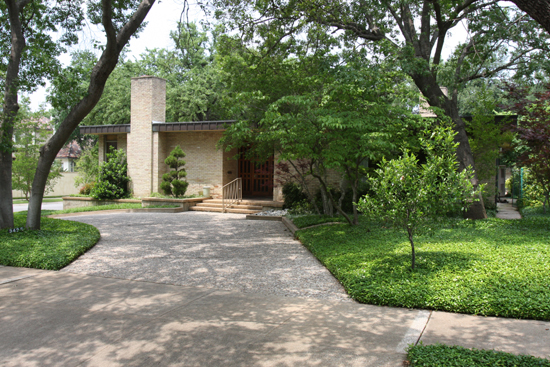
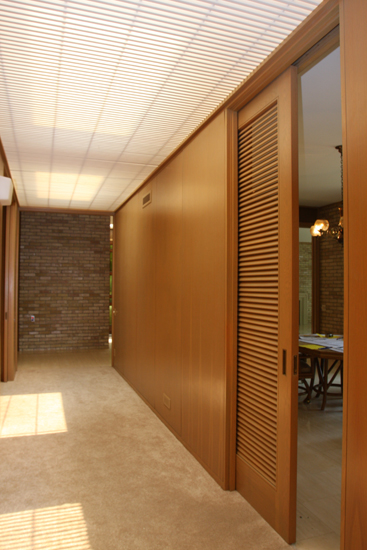
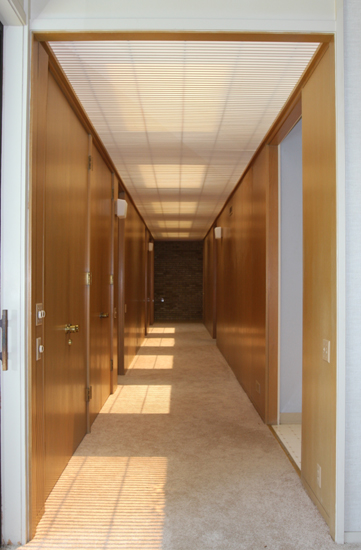
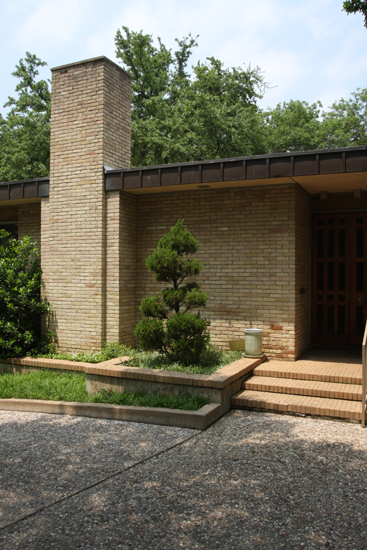
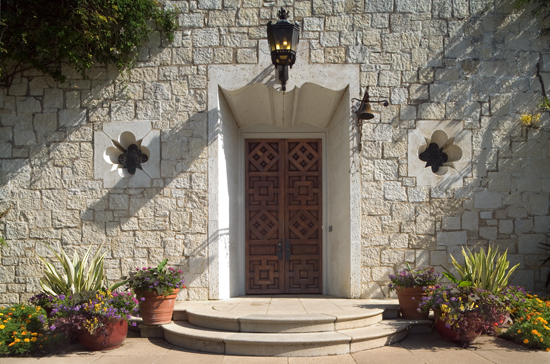
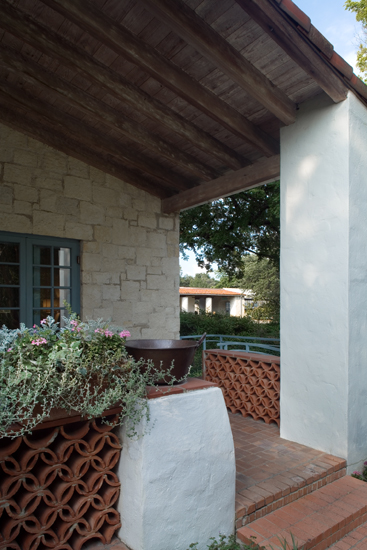
    When Connie Harkins, an associate who works with me, first went through the house she quickly called me and said, “You have to see this house. It is obviously designed by Scott Lyons.” She was right. Scott Lyons-designed fingerprints were found throughout the house. The front door, fascia, the stone floors, woodwork, soft Mexican brick, ceiling treatments, filtered skylights in the hallways and floor-to-ceiling doors were all examples of materials and design elements that Scott Lyons used at 10240 Gaywood and other prominent Highland Park and Preston Hollow homes that he designed. We mentioned to the listing agent that Scott Lyons was certainly the architect that designed the home. To the listing agent’s credit, she asked the trustee to research the files where they discovered correspondence between Scott Lyons and the original homeowner, verifying that Scott Lyons was the architect.
    Marketing Adjusted to Include Scott Lyons as Architect

    The listing agent again, to her credit, changed the marketing course. She had the interior cleaned up, and more importantly, identified Scott Lyons as the architect in the MLS description of the home. Immediately after that, a great number of potential homebuyers came to see the home. Besides talking with the listing agent, I knew interest had soared in the property as over 200 unique visitors had been directed to my site when they Googled Scott Lyons architect. Many of these potential buyers liked the home enough that they called in their architects, interior designers and contractors to give them ideas for renovation and estimates for cost. Within four weeks of Scott Lyons being identified as the architect, the trustee of the estate had several offers to choose from. The new owner will be restoring this significant Highland Park home, preserving the work of Scott Lyons, one of Dallas’ great architects.

    Most Good Homes are Never Torn Down if Potential Buyers have the Opportunity to See the Home and the Time to Understand the Home

    Architecturally significant homes on very valuable land are vulnerable, but not because buyers do not desire them, as is the case with the Scott Lyons house, buyers need time to evaluate and understand the home. They need the time for architects, interior designers and contractors to give them ideas on both design and cost. In a normal market a builder knows the lot dimensions and can make a quick offer sight unseen. The real estate agent, as discussed in Freakonomics, has very little economic incentive to tell the seller that they can probably sell the home for an additional $200,000 if they give the buyers who will renovate the home a chance to look at it. The agent might make an additional $5,000 on a higher sale, but will have to spend more than that in time and marketing materials. And often a listing agent will be working directly with a builder so they actually would make a larger fee on a lot sale than if the property sold to an individual working with another agent.

    Sellers and the Community Benefit When Time is Taken to Market a Home.

    Preservation of the best architecture is successful when the marketplace is not abandoned prematurely. When the market is hot, lot buyers will always be available, but homeowners desiring an architecturally significant home will always pay more.

  • Turtle Creek Park is the Perfect Dallas Neighborhood

    Turtle Creek Park is the Perfect Dallas Neighborhood

    Stonebridge.jpg

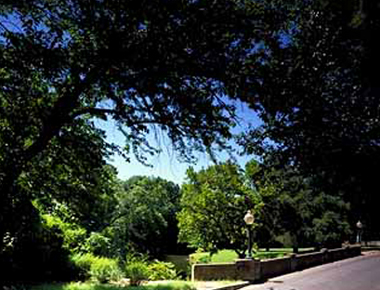
    Turtle Creek Park is a secluded, 39-house neighborhood across the stone bridge from Turtle Creek. It is framed by Turtle Creek and the Katy Trail, with Rock Creek plunging down the center of this topographically delightful neighborhood of winding streets.

    James and Patricia Shinn introduced me to this neighborhood’s incredible charms when they invited me to dinner at 3500 Rock Creek, located at the bowed corner of Rock Creek and Stone Bridge.

    The Shinns are an extraordinary couple and as diplomats have lived all over the world. They came to Dallas when Jim had taken the position of the city of Dallas’ director of international affairs when Ambassador Rubottom retired as the director.

    James Shinn – a downtown visionary, who Advocated a Park Over Woodall Rogers Fifteen years ago, James Shinn was advocating that Woodall Rogers Freeway be decked with a park with residential-retail development intersecting the park, creating the vibrant street life he considered essential if Dallas were to become an international city.

    His family home was one of the first built in Martha’s Vineyard, and his family was also one of the original landowners that helped found Oakland, California. Of course, I was more impressed that Patricia’s grandfather and my grandfather were contemporaries in Hastings, Neb., in the early 20th century, with my grandfather owning the bank and her grandfather owning the title company.

    As part of the diplomatic corps, the couple had lived in glamorous residences and locations including France and Switzerland. When they departed Dallas for California, they mentioned that of all the places they’d lived, Turtle Creek Park was their favorite. That was enough for me. If this was their favorite neighborhood, it was my favorite neighborhood.

    Turtle Creek Park’s eclectic architecture

    When I was discussing architecture with the late Glenn Mitchell on 90.1 he asked me: Where was the first place I’d take a clients who had just come to town for the first time? I said, without hesitation, “Turtle Creek Park. It is a hidden neighborhood with hills, creeks, water and an eclectic collection of houses of all styles ranging in value from $800,000 to over $10 million. And these houses all fit together like a jigsaw puzzle to make a clear and congruent picture.”

    Here is this bucolic, protected neighborhood, seemingly removed from the city, just a few hundred yards away from Salum, a chic, chef-owned restaurant, and just a few blocks from Knox and Travis and the West Village, just two miles from the Arts District and downtown — all of which is linked by the Katy Trail or the strand of parks along Turtle Creek.

    An Enticing Topography of Turtle Creek Neighborhood

    Turtle Creek Park is the perfect neighborhood because it is small and well-defined. Even with the small number of homes, there’s a sense of place, and a person knows they are in a neighborhood. There’s a great range of values and styles. There’s an aesthetic continuity that makes you think of the neighborhood as a whole, not as a collection of competing houses.

    Trees, wildlife, seclusion, protection, water, streets curving across an enticing topography – all desired but in short supply in any city. As you might imagine, every year there’s an annual multi-course traveling dinner from house to house, exuding friendly relations between neighbors, the real definition of a neighborhood.

    Turtle Creek Park defies all expectations. It has all of these lovely assets virtually in the center of Dallas.

  • Bad Times. Best Architecture.

    Bad Times. Best Architecture.

    5_willowood_1.jpg

    While it has always been counterintuitive, when the economy is down, the best residential real estate projects get better. Homeowners and homebuyers turn from quick, speculative investments to properties with solid, long-term aesthetic and architectural value. Historically the finest architect-designed homes are often built or renovated when the real estate market is depressed. The finest architects, designers, builders, artisans, and materials are available.  Bids are now coming in as much as 20 percent less than last year on architect designed homes. Also, as the demand from speculative builders evaporates, land becomes more available for architect designed homes, and architecturally significant period homes become attractive to renovate, not tear down.

    Great houses coming out of the last downturn

    We saw this in the mid 1990s.  Nationally recognized residences were built including the Antoine Predock designed home in Highland Park on Willowood, the Steven Holl designed home in Preston Hollow on Rockbrook Drive, and the Richard Meier designed home on Preston Road.  Architecturally Significant homes of national importance were also renovated during this period: the former Owsley estate, now the Marcus estate, on Turtle Creek Boulevard in Volk Estates, originally designed by architect John Scudder Adkins, with Bill Booziotis and Peter Marino as the renovation architects; and the former Crespi estate, now the Hicks estate, on Hollow Way in Mayflower Estates, designed by architect Maurice Fatio and with Peter Marino serving as the renovation architect.

    Great houses available now

    Now, many architecturally significant homes are available at the price of the land. Currently, the best example of this is one of Dallas’ most important modern homes, on Gaywood Road in Mayflower Estates, designed by Scott Lyons on 2.63 acres. Exquisitely built, incorporating the finest materials and craftsmanship, it reflects a Texas modern style with many walls of glass and balconies overlooking the garden, small lake and the private park land of the 15 acre estate property seen across the creek. Reflecting the market, this 9,900 square foot home and 3,800 square foot guesthouse is being offered for sale at approximately the value of the land in this Preston Hollow neighborhood.

    Preston Hollow Midcentury Modern

    The best and last remaining original owner midcentury modern home on Colhurst in Preston Hollow is another example of a home that can easily be renovated and is being offered at the price of the lot.  This house has an extraordinary pedigree, with Louise Kahn as the interior designer, Richard Benson as the architect and Richard Myrick as the landscape designer.

    University Park Midcentury Modern Home

    On Wentwood in University Park, we find the home that midcentury modern architect Max Sandfield designed for his own family and will be available at lot value.

    The finest period homes have always been in the greatest jeopardy because of the demands from speculative homebuilders.  Homeowners, in the past, often never had a chance to purchase these architecturally significant homes they loved because homebuilders only needed to know the lot size to quickly buy a home to tear down.

    Architecturally Significant Homes Coming on Markets

    Housing prices have plummeted – as much as 40% in some U.S. cities – but low tax rates in Texas and strong employment rates are keeping Dallas’ property values surprising strong.  While the Dallas real estate market was shut down for a few months this fall, much like it was for a few months after September 11, 2001, the real estate market started to come back in December with several good properties selling and many exceptional properties coming on the market.

  • Haciendas Reflect History and Origins of Texas Modern

    Haciendas Reflect History and Origins of Texas Modern

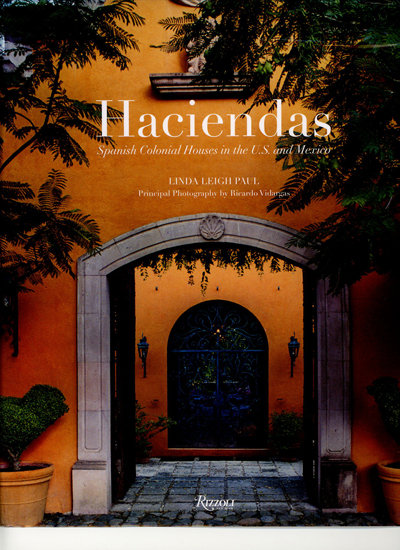
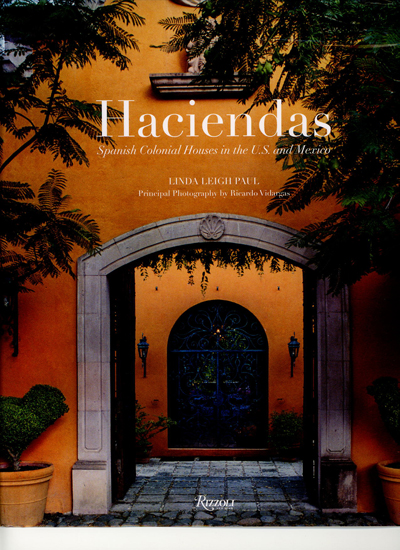
    Haciendas, by Linda Leigh Paul, is a beautiful and well-written book that explores Haciendas.

    DeGolyer Estate in Dallas Featured

    The DeGolyer Estate in Dallas is the first hacienda discussed in the book and becomes the lens to look at the other haciendas from across the country and Mexico that are photographed and described.

    Haciendas Influenced Texas Modern Architecture

    Haciendas invoke visions of the rich history of the Southwest, California and Mexico.
    Haciendas also give us a glimpse of the inspiration for the first Texas Modern houses built in the early 1930s by David Williams and O’Neil Ford.

    Charles Dilbeck Uses Hacienda Detail a Few Years Earlier than DeGolyer House

    This inspiration is also seen in the details used by Charles Dilbeck who took credit for introducing the first suburban ranch house, and the refined Texas modern houses designed by Frank Welch, FAIA, and other contemporary Texas architects.  Haciendas and Texas modern homes share many similar characteristics.  They are oriented to protect the home from the harsh environment and cool the houses with the many verandahs and porches, capturing the southeastern breezes in the summer.  The details are hand-carved and hand-forged, the materials uses are indigenous to the region, and both haciendas and Texas modern homes have a deliberate added-on look and feel.  Texas pioneers built the essential part of the home first and were constantly adding on as resources and time became available.  Simple houses became compounds, with large rooms opening up to each other through oversized passage ways.

    The Work of On-Site Craftsman Permeate House

    The homes were grand and modern, and rooted in the individual craftsmanship permeating the homes.  Haciendas give us a chance to reflect on our history and to better understand the fundamental concepts of modern architecture.

  • Beverly Drive Chosen as First Street to be Featured as Neighborhood

    Beverly Drive Chosen as First Street to be Featured as Neighborhood

    The best feature of the The Dallas Morning News Sunday Real Estate section is the weekly article on Dallas neighborhoods.

    Mary Jacobs always writes valuable and informative pieces. The article she wrote Sunday, “Beverly’s ‘Majesty’ Makes it Iconic….Highland Park street shared its designer with Beverly Hills” highlights an iconic street in Dallas. Mary Jacobs choosing Beverly Drive as the first street to be discussed as a neighborhood shows her intuition and understanding of Dallas and its neighborhoods. Beverly Drive has always been a larger than life street, desired and romanticized by SMU coeds to home buyers.

    “What are the four most iconic streets in Dallas?” is a question of mine that Mary Jacobs quoted along with the most consistent answer: Beverly Drive.

    What also impressed me was the treatment of the neighborhood was not just demographics and prices, but the architectural appeal of the neighborhood in context to its setting designed by landscape architect Wilbur Cook and its history.

    I used to open up The Dallas Morning News Sunday paper to the sports section. Now I open it up to the Dallas neighborhood feature in the Real Estate section.